AI Security Is Moving from Frameworks to Operating Models
The Shift That Is Already Happening
The AI security conversation has matured past frameworks and principles. Organizations that are ahead of the curve are not debating which framework to adopt — they are building operating models: defined ownership structures, implementable controls, runtime monitoring and evidence trails that regulators, auditors and boards are beginning to demand.
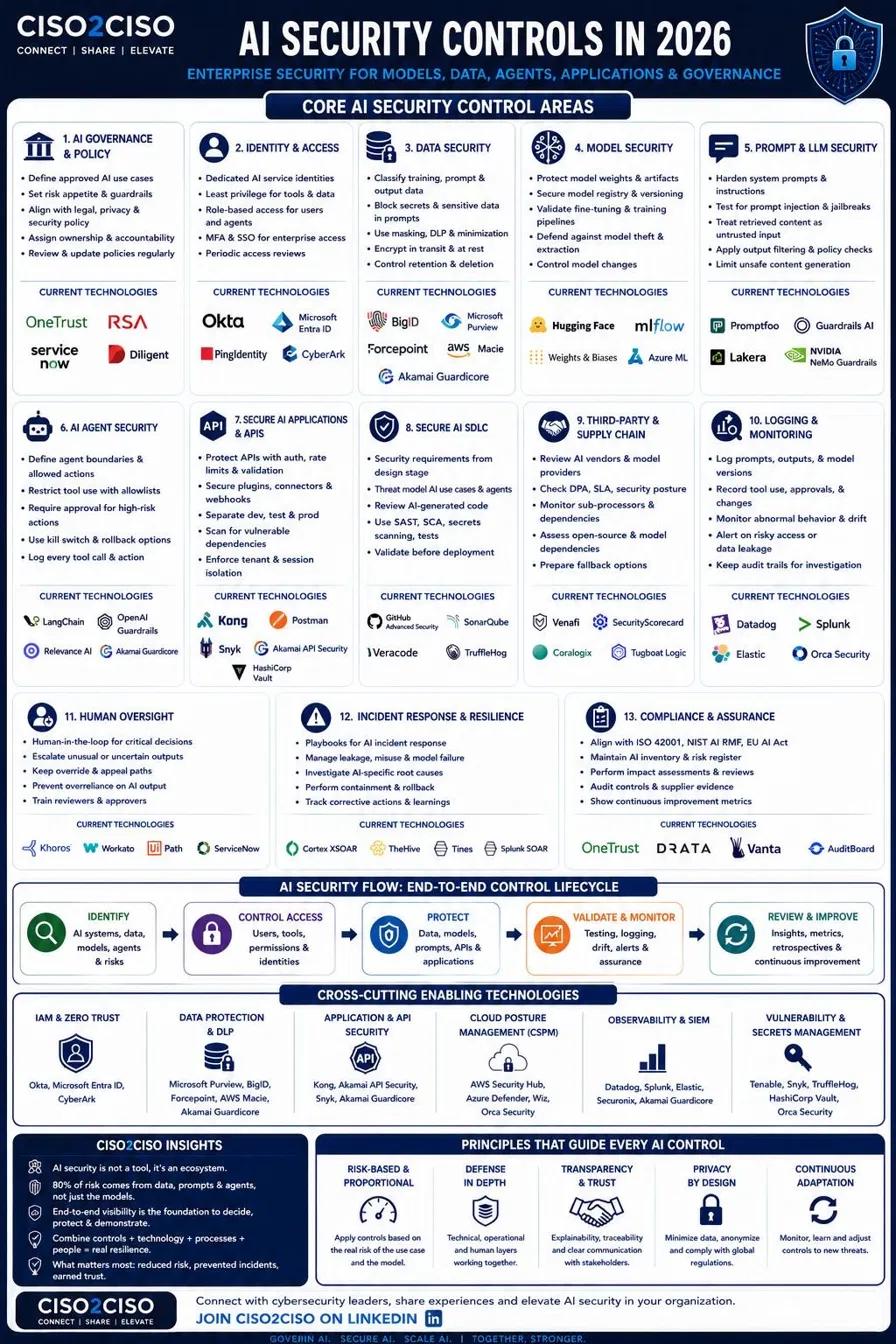
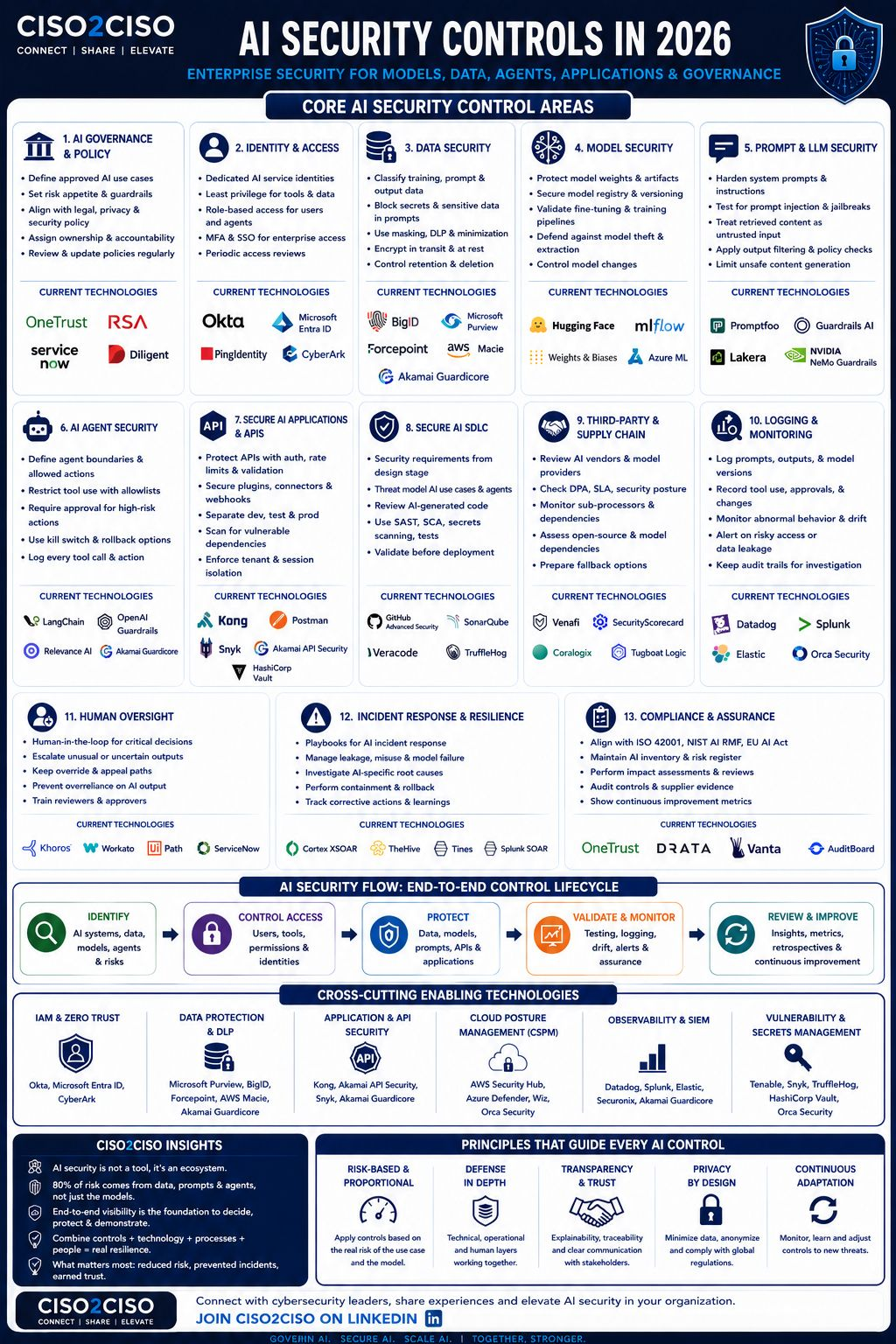
The strategic question is no longer whether AI security controls exist. It is how they are operationalized across identity, prompt security, model protection, observability, resilience and regulatory alignment.
This shift matters because AI risk is categorically different from the risks that existing security programs were designed to govern. Traditional security assumes defined assets, known attack surfaces and predictable failure modes. AI systems introduce probabilistic outputs, autonomous decision-making, delegated authority for agents, and attack surfaces that span prompts, training data, model weights, APIs and the humans interacting with the system.
The organizations building AI security as an operating discipline — with ownership, evidence and runtime visibility — will be significantly better positioned as regulatory expectations harden and adversary interest in AI attack surfaces grows.
Why the Operating Model Frame Matters
Most organizations that have invested in AI security have done so in one of two ways: they have adopted a framework (NIST AI RMF, ISO 42001, OWASP LLM Top 10) or they have deployed a point solution (a prompt firewall, an AI gateway, a data classification tool). Both are valuable starting points. Neither constitutes an operating model.
An operating model for AI security requires four things that frameworks and point solutions do not automatically provide:
Ownership at every layer. AI security requires governance at every layer of the stack — identity and access for AI systems, data protection in prompts and outputs, model integrity and agent behavior controls, API security for AI-connected services, and observability across all of the above. Each layer requires a named owner — not "the AI team" or "security" as a catch-all, but specific accountability with defined responsibilities and escalation paths.
Risk classification that drives control intensity. Every AI system in production — including AI capabilities embedded in SaaS and vendor products — should be inventoried and risk-classified. The classification drives control intensity. A high-risk AI system with access to sensitive data or decision authority over consequential outcomes requires significantly different governance than a low-risk productivity tool. Without classification, control investment is distributed by visibility rather than risk.
Evidence architecture that satisfies regulators. Boards and regulators are beginning to ask for proof that AI controls operate in production — not documentation that they exist, but evidence that they function. Building the logging, monitoring and audit trail infrastructure that produces that evidence is a design requirement, not an afterthought. The organizations that build evidence architecture now will be ahead of the compliance curve when regulatory expectations formally crystallize.
Regulatory alignment as a design input. NIST AI RMF, ISO 42001, OWASP LLM Top 10 and EU AI Act expectations are converging on similar requirements: inventory, risk classification, control ownership, runtime monitoring and evidence. Organizations that build their operating model against these frameworks now are building something that will satisfy regulatory scrutiny as it arrives, rather than retrofitting compliance onto a security architecture designed without it.
The AI Attack Surface Has Expanded Dramatically
Understanding what the operating model must protect requires understanding how the AI attack surface differs from traditional IT risk.
Prompt injection — attackers crafting inputs that override system instructions, bypass safety guardrails or cause the AI system to take unintended actions — represents a class of attack with no direct analog in traditional software security. The vulnerability is not in a library or a configuration. It is in the interaction between user-controlled inputs and model behavior.
Training data poisoning — the manipulation of training datasets to introduce biases, backdoors or capability degradations — affects model integrity at the source, before deployment. Detecting it requires supply chain controls and model validation processes that most organizations have not yet established.
Agent escalation and privilege abuse — AI agents operating with delegated authority to take actions across enterprise systems create a new class of privileged identity. An agent that can read email, write to databases, execute code and initiate external communications is a high-privilege principal that requires the same governance as a privileged human account — and most organizations are granting these capabilities without applying equivalent controls.
Model extraction and intellectual property theft — sophisticated query strategies can extract proprietary information about a model's training, capabilities or weights, enabling competitive intelligence gathering or preparation for targeted attacks.
Output manipulation for downstream harm — AI systems whose outputs flow into consequential decisions — credit, hiring, medical, legal — can be manipulated to produce systematically biased or harmful outcomes at scale, with impacts that may not be visible at the individual transaction level.
Executive Framework: AI Security by Control Domain
| Control Domain | What It Governs | Key Evidence Requirement |
|---|---|---|
| Identity & access | Who and what can interact with AI systems | Access logs, authentication records, privilege review |
| Data protection | Sensitive data in prompts, training and outputs | Classification coverage, DLP events, output scanning |
| Model & agent security | Integrity, behavior and delegated authority | Model validation records, agent permission logs |
| API & integration security | Connections between AI systems and enterprise data | API authentication logs, traffic anomaly detection |
| Observability & monitoring | Runtime visibility into AI usage and anomalies | Monitoring coverage, alert response times |
| Evidence & audit | Demonstrable proof that controls operate | Audit trail completeness, regulatory readiness |
What CISOs Should Do Next
Conduct an AI system inventory. Start with the question: what AI systems are operating in our environment, including AI capabilities embedded in vendor products and SaaS platforms? Most organizations discover that their AI footprint is significantly larger than formally recognized. The inventory is the prerequisite for everything else.
Apply risk classification. For each identified AI system, apply a risk tier based on: sensitivity of data it accesses, consequentiality of decisions it influences, breadth of its authority to take autonomous actions, and exposure to external or untrusted inputs. High-risk systems require immediate governance attention. Lower-risk systems require baseline controls and monitoring.
Assign explicit ownership. For each high-risk AI system, identify a named owner accountable for its security controls — not a team, but a person. Define what that ownership means: what controls they are responsible for implementing, what evidence they are responsible for producing, and what escalation path exists when something goes wrong.
Build the evidence layer. Implement logging, monitoring and audit trail infrastructure that captures what AI systems are doing, what data they are accessing, and whether their behavior is consistent with their defined scope and permissions. This infrastructure serves both security operations and regulatory compliance.
Align with regulatory frameworks proactively. Map your current AI security controls against NIST AI RMF, ISO 42001, OWASP LLM Top 10 and EU AI Act expectations. Identify gaps. Prioritize remediation based on regulatory timeline and risk exposure. The organizations that do this proactively will not be caught retrofitting compliance at the worst possible time.
Board-Level Questions
- Do we have a complete inventory of AI systems operating in our environment, including vendor-embedded AI capabilities?
- For each high-risk AI system, is there a named individual accountable for its security controls — not a team, but a person?
- Can we demonstrate to regulators that our AI security controls are operational, with audit trail evidence of their function?
- What is our current exposure from AI agents operating with delegated enterprise authority and no behavioral monitoring?
- How does our AI security posture compare to the expectations of NIST AI RMF, ISO 42001 and EU AI Act?
Final Takeaway
AI security maturity is not measured by framework adoption. It is measured by operational reality — whether controls exist in production, whether they are monitored, whether ownership is clear, and whether the organization can produce evidence of all of the above.
The organizations that are building AI security as an operating discipline — with ownership, evidence and runtime visibility across every layer where AI touches enterprise data and decisions — will be significantly better positioned as regulatory expectations harden and adversary sophistication in AI attack surfaces grows.