The Cloud Shared Responsibility Model Has a Gap — And It Is Yours
Executive Summary
The shared responsibility model is the foundational concept of cloud security. AWS, Azure, and Google Cloud all publish versions of it. Every cloud security framework references it. Most cloud security training programs begin with it.
And yet it is one of the most reliably misunderstood concepts in enterprise technology — misunderstood in ways that have caused real, material, costly security incidents across organizations of every size and sector.
The model is simple in principle: the cloud provider secures the infrastructure layer — the physical data centers, the virtualization layer, the core network infrastructure, and the managed services they provide. The customer secures everything above that layer — their data, their applications, their identity configurations, their network access controls, and their operational processes.
Simple in principle. Catastrophically misunderstood in practice.
Why This Matters Now
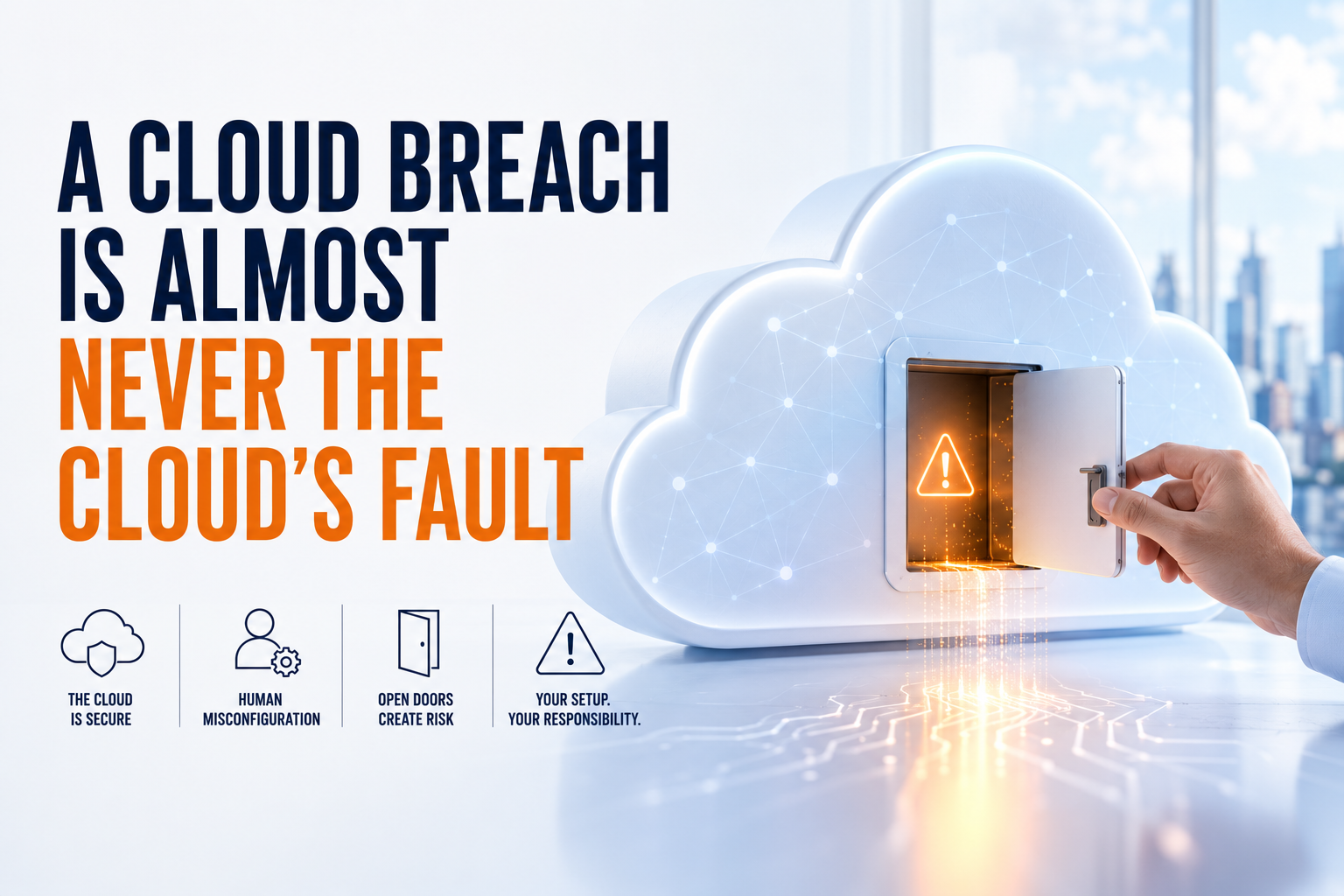
Cloud adoption has accelerated dramatically across every sector, and with it, the attack surface that exists in the customer responsibility layer has expanded correspondingly. The percentage of significant cloud breaches that are attributable to customer-side misconfiguration, weak identity controls, and inadequate access management — rather than vulnerabilities in the cloud provider's infrastructure — is consistently estimated at over 99%.
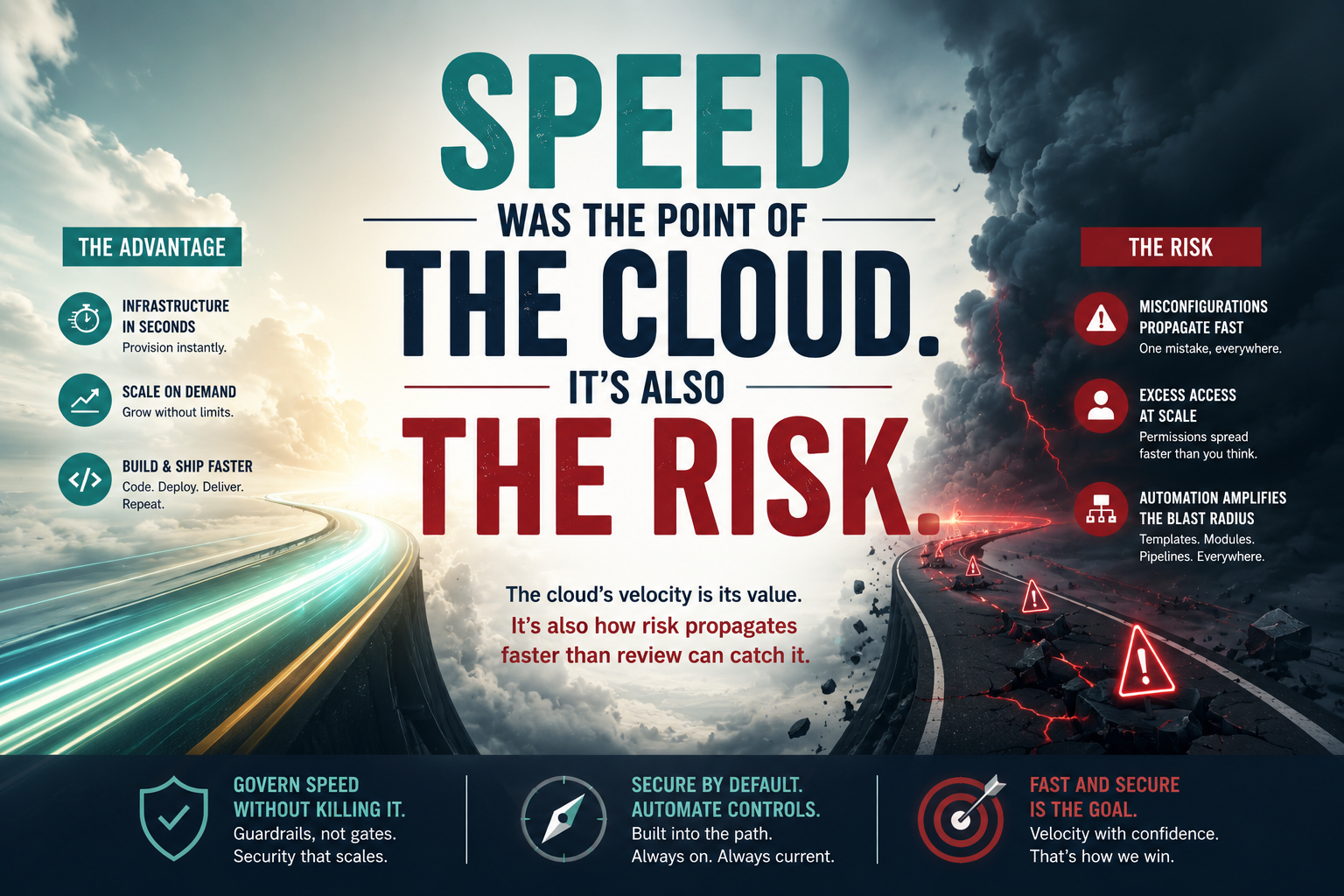
This is not a marginal issue. It is the primary driver of cloud-related security incidents. And the rate at which organizations are migrating workloads to cloud environments means the gap between what organizations think they are responsible for and what they are actually responsible for continues to widen.
The cloud provider's responsibility ends at a specific boundary. Everything on the customer side of that boundary is the customer's problem — regardless of what the customer assumed, regardless of what the sales process implied, and regardless of what default configurations look like out of the box.
CISO2CISO Insight
When an organization's cloud environment is breached because of a misconfigured S3 bucket, an over-permissioned service account, or a publicly exposed API — that is not a cloud provider failure. It is a customer failure. The shared responsibility model was always clear about this. The breach just made it explicit.
Where the Gap Actually Lives
The customer responsibility layer is broader and more complex than most organizations realize — and the highest-risk areas are not always the most visible ones.
Identity and access configuration. Cloud identity is extraordinarily powerful and extraordinarily easy to misconfigure. Over-permissioned IAM roles, unused access keys, service accounts with admin-level privileges, and lack of MFA enforcement on privileged accounts are among the most commonly exploited customer-side vulnerabilities. The cloud provider secures the identity service infrastructure. The customer is responsible for how they configure and use it.
Data classification and exposure. Cloud storage services — S3, Azure Blob, Google Cloud Storage — are private by default. But they require deliberate configuration to stay that way across every bucket, every container, and every object. The number of significant data exposures attributable to misconfigured cloud storage buckets — data that was never intended to be public but was inadvertently exposed — runs into the thousands. The cloud provider did not expose the data. The customer's configuration did.
Network security group management. Cloud network controls — security groups, network access control lists, virtual network configurations — are powerful and flexible. They are also easy to misconfigure in ways that expose workloads to the public internet without clear intent. Overly permissive inbound rules, open management ports, and inadequate segmentation between workload tiers are persistent sources of cloud-side exposure.
Logging and monitoring configuration. Cloud providers offer comprehensive logging capabilities — CloudTrail, Azure Monitor, GCP Cloud Logging — but they are not enabled by default in all cases, and they require deliberate configuration to capture the events that matter for security investigation and incident response. Organizations that assume their cloud provider is logging everything relevant to a security investigation often discover, during an incident, that critical audit trails were never configured.
Third-party integrations and marketplace deployments. Cloud marketplaces and third-party integrations extend the attack surface in ways that are often invisible to security teams. Applications deployed from cloud marketplaces, SaaS integrations that receive broad API permissions, and third-party tools that require cross-account access all represent customer-side risk that the cloud provider has no visibility into or responsibility for.
Executive Framework
| Responsibility layer | Cloud provider | Customer |
|---|---|---|
| Physical infrastructure | ✓ | — |
| Virtualization and hypervisor | ✓ | — |
| Managed service security | ✓ | — |
| Identity and access configuration | — | ✓ |
| Data classification and encryption | — | ✓ |
| Network controls and segmentation | — | ✓ |
| Logging and monitoring setup | — | ✓ |
| Application security | — | ✓ |
What CISOs Should Do Next
- Map your cloud workloads against the shared responsibility boundary — specifically identifying every capability in the customer responsibility layer and assessing current control coverage.
- Implement cloud security posture management (CSPM) tooling that continuously evaluates your cloud configurations against security best practices — and alerts on deviations in near-real time.
- Audit IAM configurations across all cloud accounts: identify and remediate over-permissioned roles, unused access keys, and accounts without MFA enforcement.
- Verify logging configuration across all cloud accounts and services — confirm that CloudTrail, Azure Monitor, or equivalent is fully enabled and that logs are retained in an environment that cannot be deleted by a compromised account.
- Establish a cloud configuration change management process — ensuring that changes to security-relevant configurations go through a review process before being applied to production.
- Brief the board on the shared responsibility model specifically — framing it as a clear statement of organizational accountability that cannot be delegated to the cloud provider.
Board-Level Questions
- Do we have comprehensive visibility into our cloud configuration posture across all accounts and regions?
- Are we actively monitoring for misconfigurations in real time, or discovering them retrospectively after incidents?
- Is our cloud identity and access management configuration subject to the same rigor as our on-premises identity governance?
- Do we understand how the shared responsibility boundary applies to our specific cloud deployment model?
Final Executive Takeaway
Cloud providers have built extraordinarily robust, well-secured infrastructure. The attacks that succeed against cloud environments are almost never attacks on the provider's infrastructure. They are attacks that exploit the customer's own configuration choices, identity management gaps, and operational practices.
The shared responsibility model is not a technicality or a legal disclaimer. It is an accurate description of where the actual risk lives — and it consistently points to the same conclusion: the security of your cloud environment is primarily your responsibility, exercised through thousands of configuration decisions that your cloud provider has no insight into and no obligation to correct.
The most important cloud security question is not "is our cloud provider secure?" — it is "have we actually taken responsibility for everything that the shared responsibility model assigns to us?"