Cloud Security Hub
Cloud security as a board-level risk and operating discipline
Executive intelligence on CSPM, CNAPP, cloud-native runtime, identity in the cloud, and the architectures reshaping cloud security for 2026.
4
Executive briefs
5
Events tracked
2
Cloud signals this week
Executive Pulse
What matters this week
Week of October 5, 2026
Identity is becoming the operational control plane for AI and cloud governance.
Executive teams should assess whether identity governance, privilege control and non-human identities are being managed as enterprise risk.
Read context
Board signalCloud governance is shifting from posture visibility to business-risk prioritization.
Security leadership should ensure cloud risk is prioritized by blast radius, identity exposure and operational importance.
Read context
Intelligence Map
The Cloud security landscape
A living map of the domains, frameworks and runtime layers shaping AI security as an operating discipline. Curated by CISO2CISO editorial — click to explore vendors, capabilities and the architecture view.
Featured Insights
Executive briefs to read first

Cloud Security
The Cloud Shared Responsibility Model Has a Gap — And It Is Yours
Cloud providers are responsible for the security of the cloud. You are responsible for security in the cloud. That distinction has caused more enterprise breaches than any sophisticated attack technique.
Read insight →

Cloud Security
You Cannot Protect Data You Cannot See
Data proliferation has outpaced data governance in most enterprises. Organizations are protecting data they know about while leaving vast amounts of sensitive, unclassified, and ungoverned data exposed to both external attackers and internal misuse.
Read insight →
The Latest
Recent executive briefs

Cloud Security
The Cloud Breach Is Almost Never the Cloud's Fault
The dominant cause of cloud incidents is not a failure of the cloud provider. It is the organization's own configuration, identity and architecture decisions operating exactly as instructed. Securing the cloud is less about defending a perimeter and more about governing the decisions that determine what is exposed.
Read insight →
Cloud Security
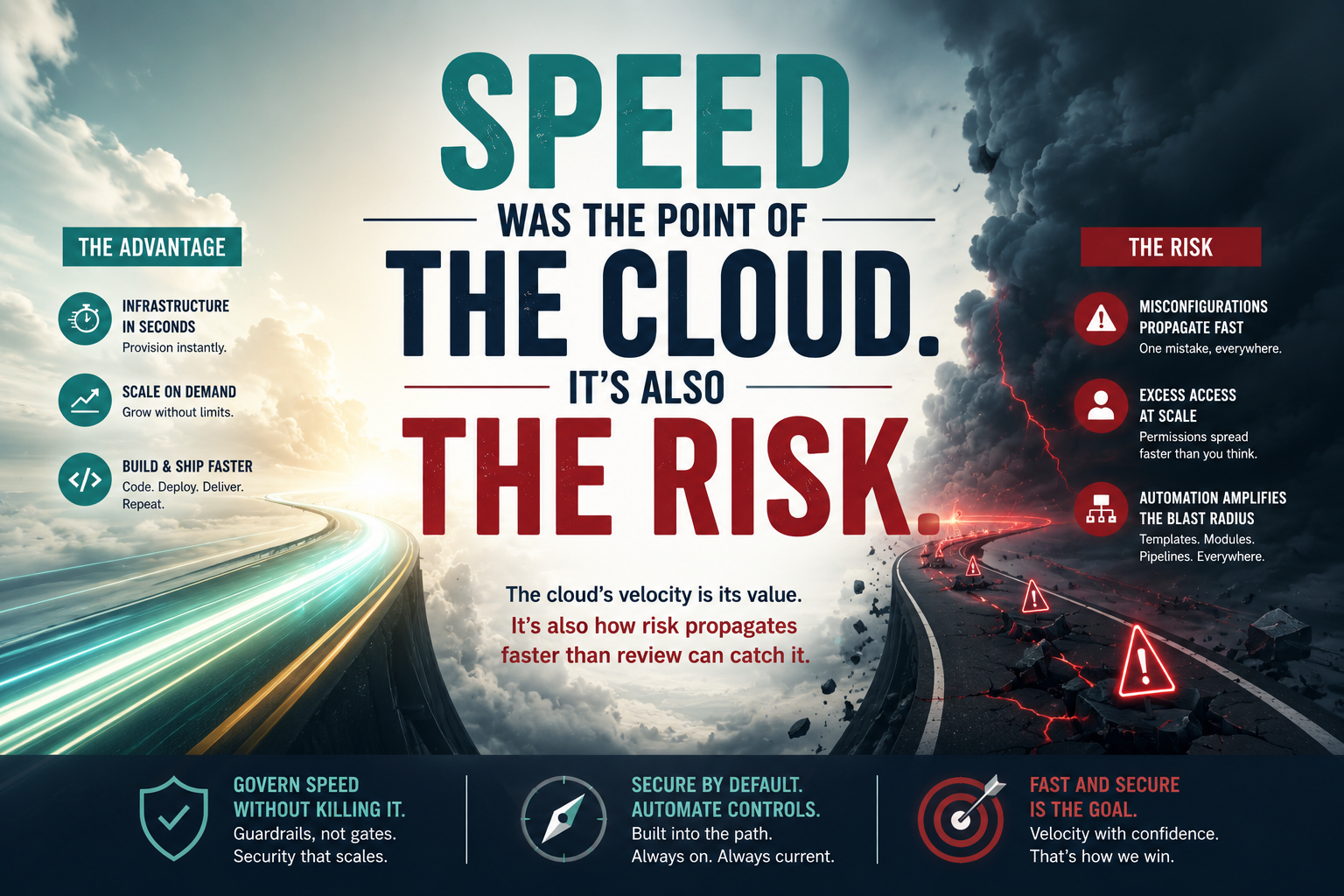
Speed Was the Point of the Cloud. It's Also the Risk.
The cloud's defining advantage is velocity — infrastructure created and changed in seconds, by anyone, through code. That same velocity is how misconfigurations and excess access propagate across an environment faster than any review can catch them. Securing the cloud means governing speed without killing it.
Read insight →
Engage
Three ways to participate in the Cloud Security Hub
Subscribe
Cloud Intelligence Brief
Weekly executive briefing on Cloud security signals, frameworks and board-level developments.
SubscribeJoin
Cloud Hub discussion
Closed-door, CISO-only conversation on the Cloud security operating model.
Request to joinContribute
Submit insight
Share an executive-grade brief, framework, or signal with the Hub. We curate what we publish.
Submit