Geopolitical Risk Has Become a Cybersecurity Problem
Executive Summary
Geopolitical risk used to be a concern for the CFO and the board's risk committee — relevant to supply chain planning, market exposure, and regulatory strategy, but largely separate from the operational concerns of the security team.
That separation has ended. The past several years have made unmistakably clear that geopolitical events — sanctions, military conflicts, diplomatic tensions, regulatory divergence between major economic blocs — translate directly and rapidly into changes in the cyber threat landscape facing enterprises. State-sponsored threat actors are activated by geopolitical developments. Critical infrastructure attacks accompany and precede military operations. Sanctions create both legal compliance requirements and new threat actor motivations. Regulatory fragmentation between the US, EU, China, and other major economies creates compliance obligations that have direct operational security implications.
CISOs who do not have a framework for monitoring geopolitical developments and translating them into operational security decisions are operating with a significant and growing blind spot.
Why This Matters Now
The threat landscape is increasingly geopolitically segmented. The major state-sponsored threat actors — groups affiliated with Russia, China, North Korea, and Iran — have different target sets, different operational tempos, and different levels of activity that correlate directly with geopolitical developments. When tensions escalate between the US and China over Taiwan, Chinese-affiliated threat actors targeting US critical infrastructure and defense contractors become more active. When sanctions are imposed on Russia, Russian-affiliated actors targeting financial institutions and energy companies increase their operational tempo. These are not independent observations — they are documented, consistent patterns.
For enterprises in sectors that are considered strategically significant — financial services, energy, healthcare, defense, telecommunications, semiconductors — the geopolitical context is directly relevant to the threat environment. The question of which threat actors are most active and targeting organizations like yours is not a static question. It changes with the news cycle.
Regulatory fragmentation has created a different kind of geopolitical cyber risk. The divergence between US, EU, and Chinese data sovereignty requirements means that organizations operating across multiple jurisdictions are navigating fundamentally incompatible regulatory obligations. Data that must be retained in the EU under GDPR cannot necessarily be transferred to the US for security monitoring. Data that must be available to Chinese regulators may be subject to export restrictions under US law. The compliance complexity created by regulatory fragmentation is itself a cyber risk — because organizations that cannot fully comply with all applicable frameworks have gaps that create exposure.
CISO2CISO Insight
A CISO who does not track geopolitical developments is like a threat intelligence analyst who does not track threat actor infrastructure — operating without context that is directly relevant to the risk environment they are responsible for managing.
Building a Geopolitical Cyber Risk Framework
The challenge for most security teams is not motivation — it is methodology. Geopolitical risk analysis requires a different skill set than traditional security operations, and translating geopolitical intelligence into operational security decisions requires explicit frameworks.
Threat actor mapping to geopolitical context. The first step is establishing a clear connection between the geopolitical actors most relevant to your organization's geography, sector, and strategic profile, and the documented threat actor groups associated with those actors. This is not speculative — CISA, the FBI, the UK NCSC, and partner agencies publish regular attribution assessments and threat advisories that connect geopolitical developments to specific threat actor activity. Building a threat actor map that is relevant to your organization's specific profile and maintaining it as geopolitical conditions change is a foundational capability.
Sector-specific geopolitical exposure assessment. Not all organizations are equally exposed to geopolitical cyber risk. Organizations in critical infrastructure sectors, defense supply chains, financial services, and technology face significantly higher state-sponsored threat actor targeting than organizations in most other sectors. Organizations with significant operations in geopolitically contested regions — semiconductors in Taiwan, energy in Eastern Europe, telecommunications in the Middle East — carry elevated exposure that needs to be reflected in their threat model and their security posture.
Regulatory fragmentation navigation. Managing the compliance obligations created by regulatory divergence between major jurisdictions requires a cross-functional approach that bridges the CISO, the General Counsel, the CPO, and the business leaders responsible for international operations. The security implications of data sovereignty requirements — where data must reside, what can be transferred, what monitoring is permissible — need to be integrated into security architecture decisions, not addressed retrospectively when a regulatory inquiry arrives.
Geopolitically-triggered posture adjustment. The most operationally mature approach to geopolitical cyber risk involves pre-defined playbooks for posture adjustment in response to specific geopolitical trigger events. A significant escalation in tensions with a state-affiliated threat actor targeting your sector should trigger a defined set of defensive actions: increased monitoring thresholds, accelerated patching cadence for known TTPs, enhanced logging, proactive threat hunting, and executive notification. These responses should be pre-planned and rehearsed — not improvised in response to a news event.
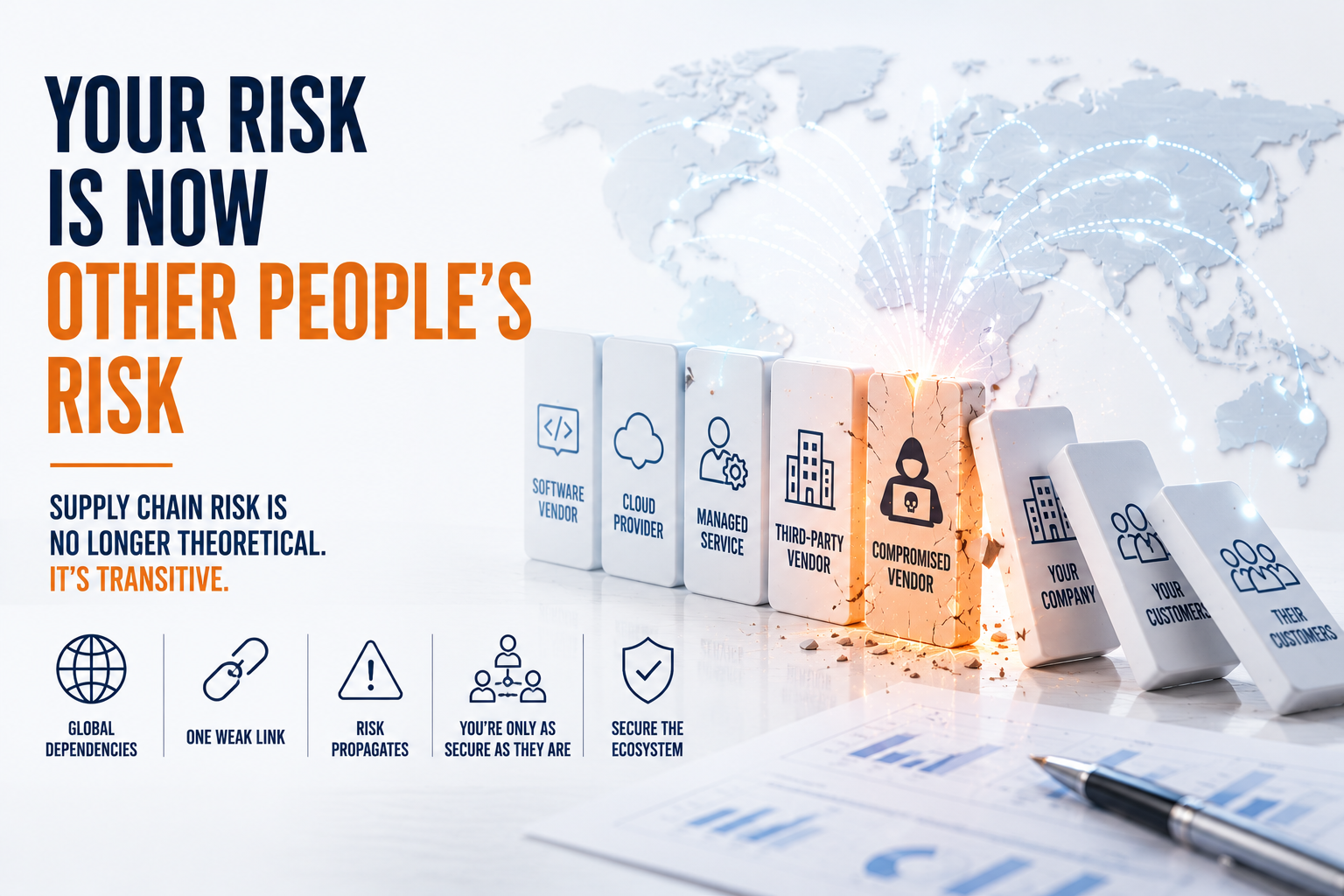
Supply chain geopolitical risk. The geographic concentration of critical technology components — semiconductors, network equipment, software development talent — creates supply chain risks with direct geopolitical dimensions. Regulatory restrictions on technology from specific countries, sanctions that affect vendor relationships, and the operational risk created by concentration in geopolitically unstable regions all require active monitoring and contingency planning.
Executive Framework
| Geopolitical factor | Cyber risk implication | CISO response |
|---|---|---|
| State-sponsored conflict escalation | Increased targeting of sector-aligned organizations | Elevated alert thresholds and proactive threat hunting |
| Sanctions on technology vendors | Vendor relationship disruption; potential access termination | Vendor dependency mapping and contingency planning |
| Regulatory fragmentation | Compliance gaps in cross-border data flows | Architecture review for data sovereignty compliance |
| Supply chain geographic concentration | Single-source risk for critical technology components | Diversification assessment and contingency suppliers |
| Critical infrastructure designation | Elevated threat actor targeting and regulatory scrutiny | Enhanced monitoring and government intelligence sharing |
What CISOs Should Do Next
- Develop a threat actor map specific to your organization: which state-sponsored groups are most likely to target your sector and geography, and what are their documented TTPs?
- Establish a monitoring process for geopolitical developments that are directly relevant to your threat actor map — with a defined mechanism for translating significant developments into operational security responses.
- Assess your data architecture for regulatory fragmentation compliance: can you demonstrate compliance with data sovereignty requirements across all jurisdictions where you operate?
- Map your technology supply chain for geographic concentration risk: where are you dependent on components or services that are subject to geopolitical supply disruption?
- Engage with government threat intelligence sharing programs relevant to your sector — CISA, FS-ISAC, H-ISAC, E-ISAC, and equivalent organizations provide geopolitically-contextualized threat intelligence that most organizations do not access.
- Include geopolitical cyber risk in your board risk reporting: frame it as a business risk with operational security implications, not as a separate category of technical threat intelligence.
Board-Level Questions
- Have we assessed how our organization's geopolitical exposure affects our cyber threat profile?
- Do we have visibility into the state-sponsored threat actor groups most likely to target organizations in our sector and geography?
- Are our data architecture and compliance posture aligned with the regulatory requirements of all jurisdictions where we operate?
- Do we have pre-defined response protocols for geopolitical developments that are likely to affect our threat environment?
Final Executive Takeaway
Geopolitical cyber risk is no longer a niche concern for defense contractors and critical infrastructure operators. The range of organizations facing state-affiliated threat actor targeting has expanded significantly — and the regulatory complexity created by geopolitical divergence between major economic blocs affects virtually every organization with international operations.
The CISOs who are managing this well have done something simple but consequential: they have added geopolitical context to their threat intelligence practice and their risk reporting. They track the relevant actors, monitor the relevant developments, and have predefined responses to the scenarios most likely to affect their organization.
The geopolitical dimension of cyber risk will not decrease. The question is whether your organization has a framework for incorporating it — or whether geopolitical developments will continue to generate threat landscape changes that arrive as surprises rather than anticipated scenarios.