Single-Vendor SASE or Best-of-Breed? You're Asking the Wrong Question.
Executive Summary
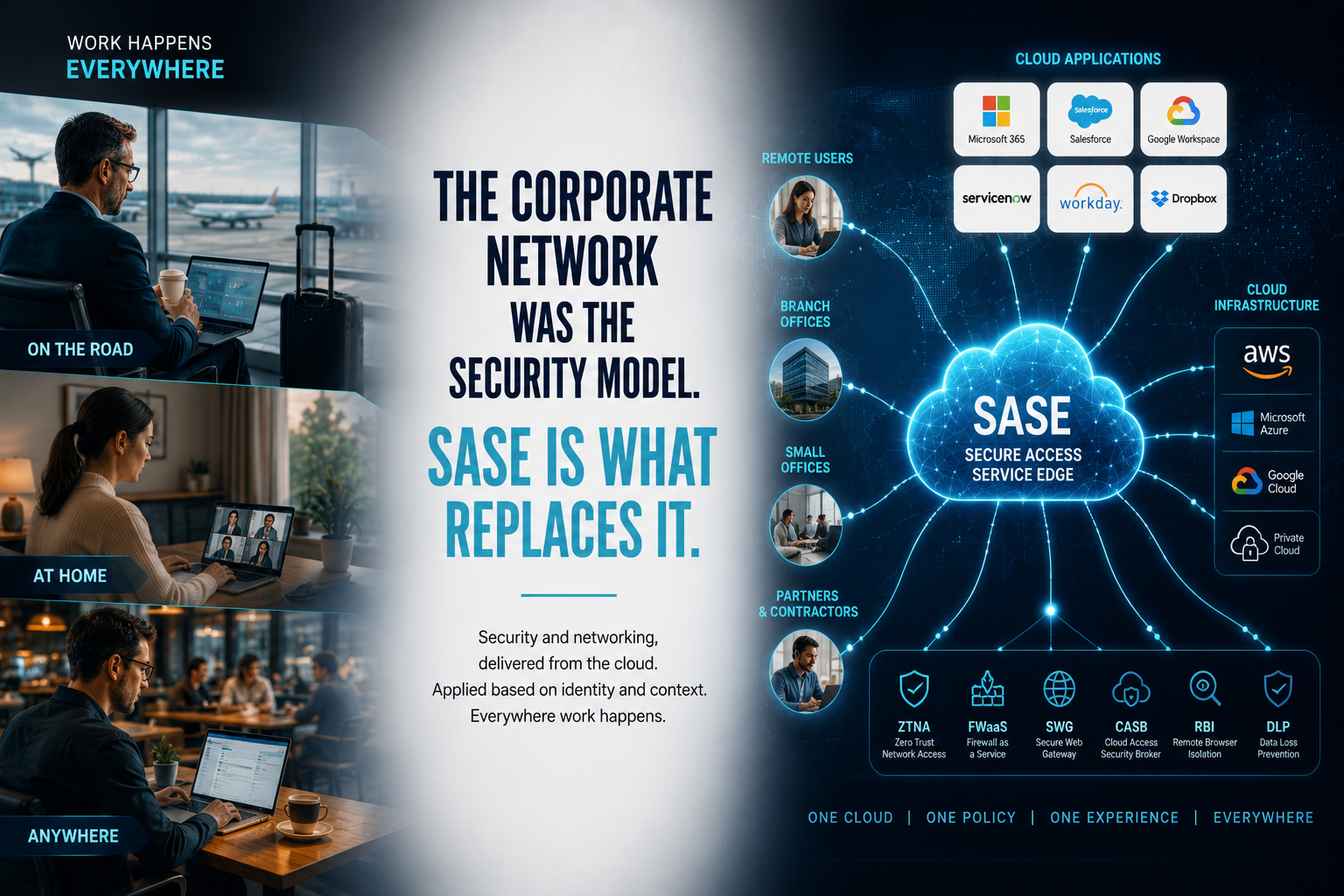
Any organization seriously adopting a secure access service edge architecture quickly encounters a debate that is presented as the central strategic choice: should it consolidate on a single SASE vendor that provides the whole stack, or assemble a best-of-breed architecture from specialized components? Vendors, analysts and peers all have strong opinions, and the conversation tends to organize itself around this binary as though everything depends on getting it right.
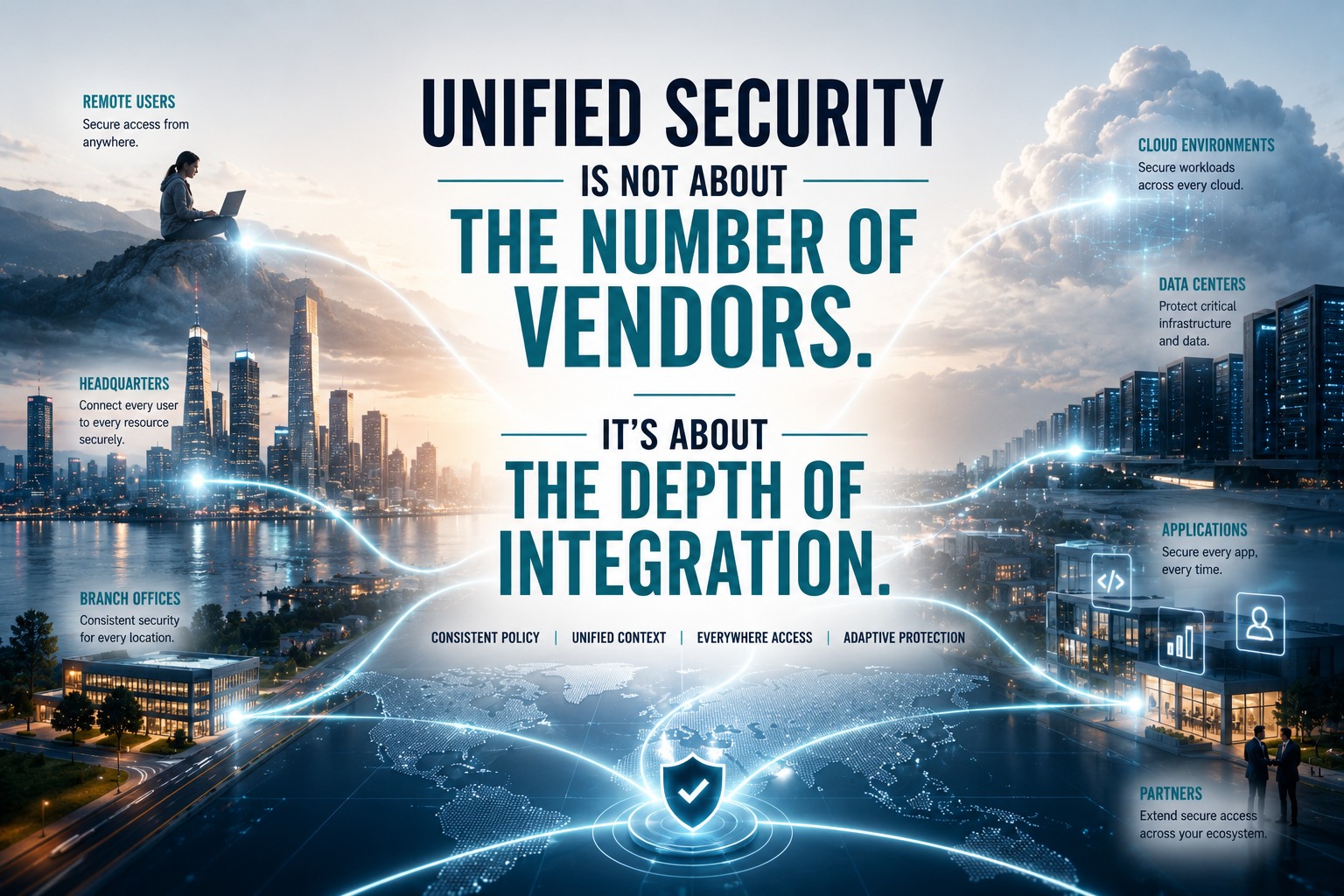
It is the wrong question — or at least, it is a question that obscures the thing that actually matters. The single-vendor versus best-of-breed framing puts vendor ideology at the center of the decision, when the real determinant of whether a SASE deployment succeeds is something the framing barely addresses: how deeply the components are integrated and how consistently policy can be defined and enforced across the whole architecture. A single-vendor stack that is integrated in name only fails for the same reason a best-of-breed assembly with poor integration fails — and a well-integrated version of either can succeed.
The decision that matters is not "one vendor or several." It is "what level of genuine integration and policy consistency does this architecture deliver, and what am I trading to get it?" Reframing the question this way changes how the organization should evaluate its options entirely.
Why This Matters Now
The framing matters because organizations are making consequential, long-lived architectural commitments based on the wrong criteria. SASE is not a quick purchase; it becomes the foundation of how the organization secures access for years. A decision made on vendor-consolidation ideology — "single vendor is simpler" or "best-of-breed is always better" — rather than on the substance of integration and policy consistency can lock an organization into an architecture that does not actually deliver the unified, consistent security SASE promises.
The stakes are heightened by the reality that the SASE market is full of offerings that carry the architecture's promise without its substance. A single-vendor stack assembled through acquisitions may be a collection of separate products under one logo, integrated loosely. A best-of-breed architecture may achieve tight integration or may be a set of disconnected tools with policy defined inconsistently across each. The label — single-vendor or best-of-breed — tells you almost nothing about which of these you are getting. Only an evaluation focused on integration depth and policy consistency does.
CISO2CISO Insight
"One vendor or several" is a question about procurement. "How unified is the policy and how deep is the integration" is a question about whether the thing works. Organizations keep answering the first and then wondering why the second went wrong.
What Actually Determines Success
Strip away the vendor-consolidation ideology and the factors that genuinely determine a SASE architecture's success come into focus.
Policy consistency across the architecture. The core promise of SASE is unified, consistent security applied wherever the user and resource are. That promise is delivered or broken by whether policy can be defined once and enforced consistently across all the components — or whether each component has its own policy model, its own console, and its own gaps at the seams. Policy consistency is the substance; everything else is in service of it.
Depth of integration. Whether the components are from one vendor or several, what matters is how genuinely they work as one fabric — whether networking and security decisions are made together, whether telemetry and context flow across the components, whether the whole behaves as an integrated system. Deep integration is the difference between an architecture and a bundle, regardless of how many logos are on the invoice.
Operational coherence. A SASE architecture has to be operated — managed, monitored, troubleshot. An architecture that requires juggling multiple disconnected management planes imposes an operational cost and creates the gaps where things fall between the components. Operational coherence is a major part of what consolidation, done well, is supposed to buy — and a major part of what poor integration destroys, in single-vendor and best-of-breed forms alike.
The trade-offs each path carries. Single-vendor consolidation tends to offer coherence and simplicity at the potential cost of best-in-class capability in any one area and at the risk of lock-in. Best-of-breed tends to offer capability and flexibility at the cost of integration burden and operational complexity. The right choice depends on which trade-off the organization can best absorb — a judgment that has nothing to do with ideology and everything to do with the organization's specific situation.
Making the Decision on the Right Terms
The reframed decision process evaluates options against the factors that determine success rather than against the consolidation binary.
It begins by treating policy consistency and integration depth as the primary evaluation criteria for any option, single-vendor or best-of-breed. It probes claimed integration rigorously, because both single-vendor stacks and best-of-breed assemblies routinely overstate how unified they actually are. It weighs the genuine trade-offs — coherence and simplicity versus capability and flexibility, lock-in versus integration burden — against the organization's own capacity to absorb each. And it recognizes that the right answer is situational: an organization with strong integration capabilities and specialized needs may succeed with best-of-breed, while one prioritizing operational simplicity may be better served by a genuinely integrated single-vendor stack. Neither is universally correct, because the universal question was never the right one.
Executive Framework
| Dimension | The wrong question | The right question |
|---|---|---|
| Frame | One vendor or several? | How unified is policy and integration? |
| What it centers | Vendor consolidation ideology | The substance of how it works |
| Single-vendor risk | Assumed simpler and better | May be a bundle under one logo |
| Best-of-breed risk | Assumed always superior | May lack integration and consistency |
| Decision basis | Procurement preference | Integration depth, policy consistency, trade-offs |
| Right answer | A universal rule | Situational, to the organization |
What CISOs Should Do Next
- Reframe the decision away from "one vendor or several" toward integration depth and policy consistency — the factors that actually determine whether SASE works.
- Make policy consistency the primary evaluation criterion, assessing whether policy can be defined once and enforced uniformly across the whole architecture.
- Probe claimed integration rigorously, since both single-vendor and best-of-breed offerings routinely overstate how genuinely unified they are.
- Weigh the real trade-offs each path carries against your organization's specific capacity — coherence versus capability, simplicity versus flexibility, lock-in versus integration burden.
- Treat the decision as situational, recognizing that the right answer depends on your needs and capabilities, not on a universal rule about consolidation.
- Evaluate operational coherence explicitly, because the cost of operating a poorly integrated architecture — and the gaps it creates — is where many SASE deployments quietly fail.
Board-Level Questions
- Are we choosing our SASE architecture based on vendor-consolidation preference, or on whether it actually delivers unified, consistent security?
- For the option we are considering, can policy be defined once and enforced consistently across the whole architecture — or does each component have its own model and gaps?
- Have we tested the integration claims, or are we trusting that a single logo or a best-of-breed label guarantees the components work as one?
- Which trade-off — coherence versus capability, simplicity versus flexibility — is the right one for our specific organization, and have we decided on that basis?
Final Executive Takeaway
The single-vendor versus best-of-breed debate has the feel of a fundamental strategic choice, and organizations invest enormous energy in resolving it. But it is a debate about the wrong variable. A SASE architecture does not succeed or fail because of how many vendors are involved; it succeeds or fails on whether the components are genuinely integrated and whether policy is consistent across them. A single-vendor stack can deliver that or fail to; a best-of-breed architecture can deliver that or fail to. The label is not the determinant.
The organizations that get SASE right are the ones that stop arguing about consolidation and start evaluating integration depth and policy consistency directly — probing the claims, weighing the real trade-offs against their own situation, and choosing the path that delivers unified security in practice rather than in marketing. The right answer is situational, which is precisely why the universal debate leads so many astray.
Single-vendor or best-of-breed is a procurement question. Whether your security is genuinely unified and consistent is the question that actually decides the outcome — and you can answer the first one perfectly while getting the second one completely wrong.
*To be continued...*