Do You Remember These Security Tools? A Nostalgic Journey Through the Tools That Forged Cybersecurity (90s–2000s)
The Years of Digital Craftsmanship
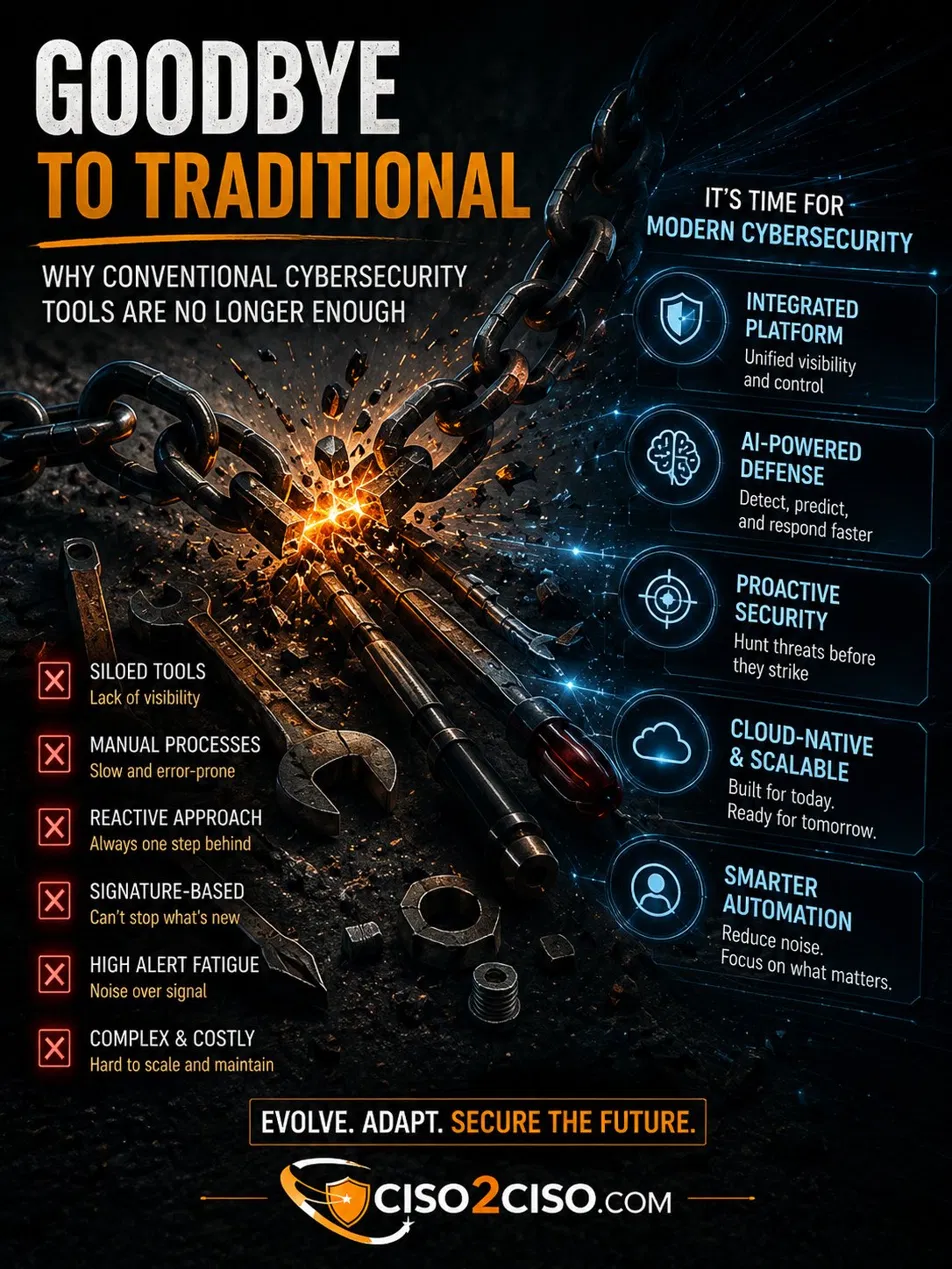
Before EDR platforms with AI-powered behavioral detection, before cloud-native SIEM with automated correlation, before zero-click deployment and managed detection services — there was a different era of cybersecurity.
Resources were limited. Interfaces were minimalist. Documentation was incomplete. And that forced us to spend hours experimenting, reading printed manuals, and sharing knowledge in underground forums and early security conferences.
Those constraints were not obstacles. They were the education.
The deep immersion in how tools actually worked — the internals of packet inspection, the mechanics of vulnerability exploitation, the logic of file system forensics — forged a generation of security professionals with a depth of understanding that automated platforms cannot replicate.
These tools did not just protect systems. They educated the people who used them.
What we learned was not just how to use the tools. It was how to think like an attacker — and that intuition still applies to the most complex problems we face today.
Pentesting and Vulnerability Analysis: The First Scanners
In the early days of cybersecurity, identifying weaknesses was a mix of art and science. These were our first instruments.
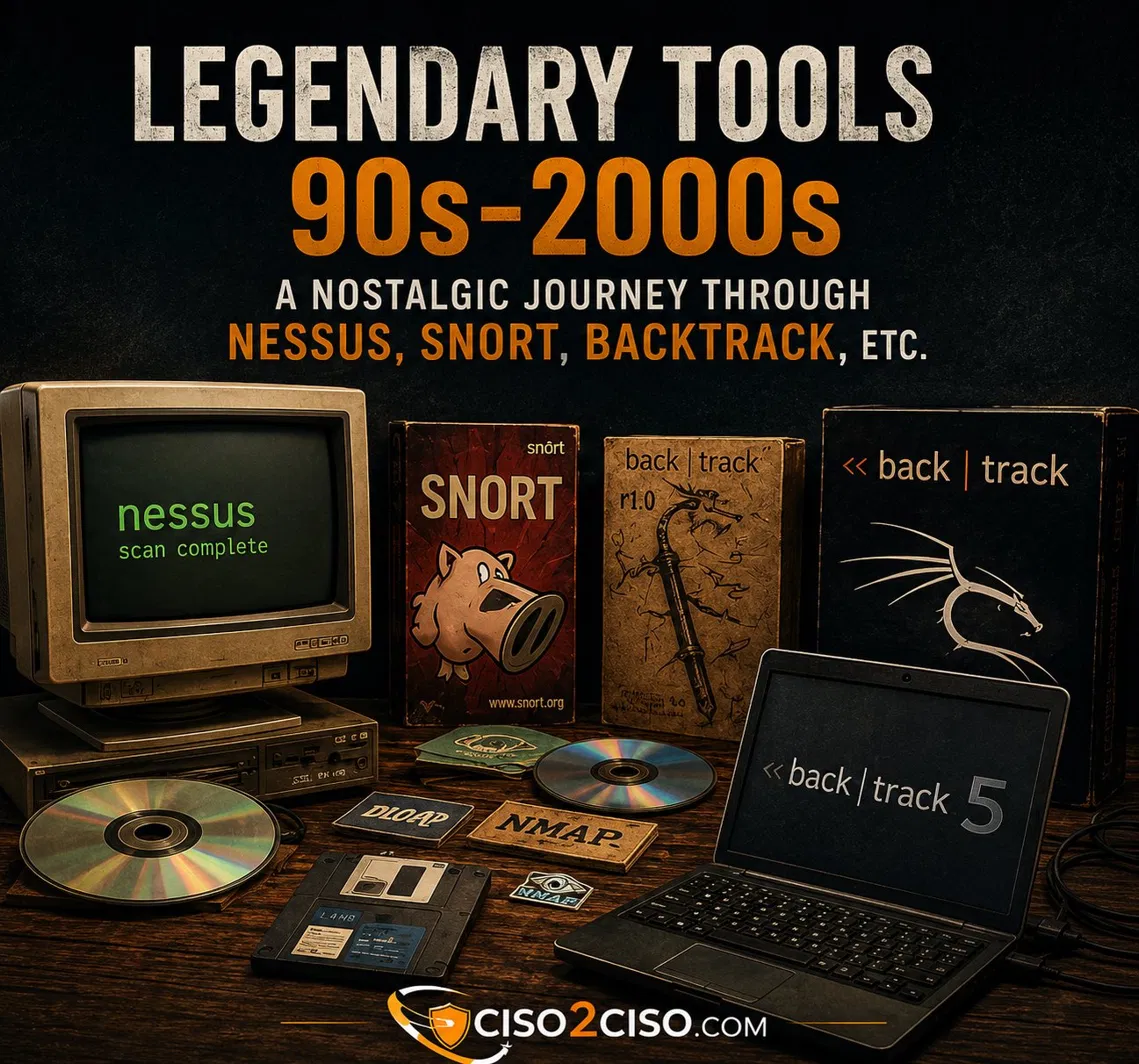
Nessus (in its open source days) — Before becoming the commercial vulnerability management leader it is today under Tenable, Nessus started as a fundamental open source vulnerability scanner. Its power resided in its client-server architecture and the ability to use NASL — the Nessus Attack Scripting Language — to create and share custom vulnerability tests. It was a do-it-yourself scanner that required you to actually understand what you were looking for and how to interpret results. The nostalgia of those first text interfaces and the endless logs we had to manually parse is undeniable. It taught us the importance of proactive patch and configuration management.
Nmap (Network Mapper) — No conversation about reconnaissance and scanning is complete without Nmap. Created by Gordon Lyon (Fyodor), this open source port scanner and network discovery tool was — and still is — indispensable. Nmap let us map networks, identify remote operating systems through OS fingerprinting, and discover vulnerable services. Every open port was a clue. Every software version was an opportunity to find an exploit. Its versatility and sophisticated scanning options made it the foundation of any network audit.
SATAN (Security Administrator Tool for Analyzing Networks) — Developed by Dan Farmer and Wietse Venema, SATAN was one of the first tools to popularize automated vulnerability scanning. In an era where graphical interfaces were nascent, SATAN ran on UNIX environments and presented its findings in HTML format — which was revolutionary at the time. It gave us a panoramic view of a network's weaknesses, all in a text interface that looks arcane today but felt like pure magic then.
BackTrack (the predecessor of Kali Linux) — BackTrack was not just a tool. It was the pentester's Swiss Army knife. A Linux distribution created by Mati Aharoni and Max Moser, packed with hundreds of pre-installed utilities for auditing, exploiting and analyzing networks. BackTrack was our practical university — a pre-configured environment that saved hours of compilation and setup and let us focus on the actual work. For many, it was the entry point to professional penetration testing.
Metasploit Framework — Although its massive popularity came in the mid-to-late 2000s, Metasploit was the framework that professionalized pentesting. Developed initially by H.D. Moore, its database of exploits, payloads and its ability to automate the exploitation process let us go beyond simple vulnerability scanning. Metasploit taught us not just to find the flaws, but to understand and demonstrate how an attacker would use them to gain access and compromise systems.
Database Security: Protecting the Heart of Information
With the explosion of web applications, databases became a primary target.
SQLmap — In the early-to-mid 2000s, SQL injection became a massive problem. SQLmap emerged as the definitive automated tool for detecting and exploiting SQL injection vulnerabilities and database takeover. It was the nightmare of developers who did not sanitize inputs and the favorite tool of pentesters for demonstrating the risk of misconfigured databases or vulnerable applications. It opened our eyes to the critical importance of security in software development.
Endpoint Protection: Our First Line of Defense Against Malware
From floppy disk viruses to the most sophisticated trojans of the era, these were the tools that stood between us and malware.
Norton Antivirus — In the late 90s and early 2000s, Norton Antivirus was the most recognized name in endpoint protection. Its interface — intuitive for the time — and its ability to detect and eliminate viruses, trojans and worms made it the default guardian of millions of personal and corporate computers. Its presence in the system tray, often with a popup alert, was a constant signal of protection.
McAfee VirusScan — Norton's great rival, McAfee VirusScan was another cornerstone of endpoint security. Known for its robust signature databases and real-time scanning, it was a constant companion that provided confidence against the most common threats of the era — despite its reputation for being somewhat heavy on system performance. The McAfee quarantine zone was a place feared by suspicious files.
Avast! and AVG — Before most antivirus tools were paid products, Avast! and AVG became popular by offering free, functional versions. They were the first line of defense for home users and small businesses that had no security budget, demonstrating that basic protection did not have to be a luxury. Their mass adoption helped democratize access to basic malware protection.
ClamAV — For the open source world, ClamAV was the antivirus of choice, especially for mail servers. Its ability to scan and detect threats in email attachments at no cost made it indispensable for many system administrators seeking an alternative to commercial solutions. Its integration with mail proxies made it a key piece of perimeter security.
Firewalls, IPS and Network Security: Fortifying the Perimeter
The firewall was the digital wall — and managing it was an essential skill.
Check Point Firewall-1 — In the 90s, Check Point was a pioneer with Firewall-1. Before firewalls became a commodity, this solution gave us granular control over network traffic, introducing the concept of the security policy as a central element. It was the first commercial tool to popularize stateful packet inspection — an innovation that redefined perimeter security. Administering it through SmartConsole was a rite of initiation.
IPTables — For those who lived in the Linux world, IPTables was the network guardian. Not a commercial solution with a polished interface, but a command-line tool that allowed precise, robust configuration of packet filtering rules, NAT and reverse NAT. It was the Swiss Army knife for protecting servers, and mastering its syntax and rule ordering was a mark of deep network and security knowledge.
Snort — The intrusion detection system that taught us to listen to the network. Created by Martin Roesch, Snort was the silent guardian of our perimeter, detecting attack signatures, protocol anomalies and malicious packets in real time. Its rule syntax — which let us write our own custom detections for emerging threats — was our secret language for defending the network. Snort did not just detect. It taught us to think like attackers so we could stay ahead of them.
TippingPoint (IPS) — In the 2000s boom, TippingPoint stood out with its IPS (Intrusion Prevention Systems). While IDS tools only alerted, TippingPoint's IPS had the ability to actively block malicious traffic inline. Its dedicated hardware and focus on network-level attack prevention made it a fundamental tool for proactively protecting perimeters, stopping known exploits before they reached servers.
Web Proxies and Content Filtering: Controlling Access to Information
Managing internet access was critical for both productivity and security.
Squid — This open source proxy and web cache server was the silent hero of many corporate networks. With Squid, we could not only optimize internet access speed by caching frequently visited content, but also implement content filtering rules based on URLs, keywords or categories, and control which sites employees visited. It was the perfect tool for web traffic auditing and keeping inappropriate browsing in check — all from the command line.
Websense (now Forcepoint) — On the commercial side, Websense became the reference for web content filtering. Its predefined filtering categories, detailed reports and ability to block sites by reputation or content type let us centrally manage browsing security. For many of us, Websense was the first professional tool we saw for this purpose.
Forensics and File Recovery: The Science of Lost Data and the Digital Trail
When the worst happened, these were our tools of last resort.
EnCase — In the forensics arena, EnCase (Guidance Software) was the most important name. It was one of the first commercial tools to offer a complete set of functionalities for forensic acquisition (bit-by-bit imaging), preservation and digital evidence analysis. It let us go beyond simple file recovery and start building solid forensic cases, examining RAM, metadata and the timeline of events on a compromised system. Mastering EnCase was a mark of a true forensics specialist.
The Sleuth Kit (TSK) and Autopsy — For the open source world, The Sleuth Kit (a collection of command-line tools) together with its graphical interface Autopsy became the option for many. Developed by Brian Carrier, they let us analyze file systems (FAT, NTFS, extX), recover deleted files, extract metadata and examine user activity. They were the foundation for understanding how attackers moved and what they left behind.
TestDisk and PhotoRec — For emergency recovery and fieldwork, TestDisk and PhotoRec were vital. They let us recover lost or damaged partitions and restore deleted files — especially photos and videos — from hard drives, memory cards and USB drives. They were the silent heroes that saved us from data loss disasters and taught us the fundamentals of file system structure.
File Integrity and OS Security: Hardening the Core
Protecting the operating system itself was a fundamental priority.
Tripwire — Before file integrity monitoring (FIM) became a well-defined security category, Tripwire was the de facto tool for detecting unauthorized changes to system files. It let us create a cryptographic baseline of critical files and be alerted if someone modified a binary, a configuration file, or created a new one. It was our first line of defense against rootkits, backdoors and OS manipulation.
Bastille Linux — For server administrators, Bastille was the system hardener. A collection of scripts and tools that analyzed and modified the OS configuration to close ports, disable unnecessary services, apply more restrictive permissions and follow security best practices — all in an automated way. It was the solution for fast, effective hardening, transforming a base system into a fortress.
L0phtCrack — Who did not use this tool? L0phtCrack was the definitive Windows password auditing tool. It taught us the importance of password hygiene and showed us how easy it was to crack weak passwords. Watching hashes — especially NTLM — fall through dictionary attacks and brute force was almost a sport. It gave us the first great lesson on the need for strong, unique passwords and the importance of salting.
Log Analysis and Early SIEMs: Finding the Needle in the Haystack
Understanding what was happening in our systems meant diving into mountains of data.
Windows Event Viewer and manual log analysis — In the 90s and early 2000s, log analysis on Windows systems was a manual and titanic task. The Windows Event Viewer was our only window into what was happening on the system, forcing us to filter events one by one looking for patterns or anomalies. Consolidating logs from different machines was a genuine headache, typically done with grep scripts on Linux or simply by hand in Notepad. A test of patience and clinical eye.
Syslog and grep — For UNIX/Linux systems, the Syslog service was the standard for log centralization. Although it did not offer advanced analysis capabilities, being able to centralize all messages on a log server let us use command-line tools like grep, awk and sed to search for patterns and correlate events. It was the foundation of what modern log management systems would become.
Splunk (early versions) — Although its massive rise and SIEM categorization is more recent, early versions of Splunk in the mid-2000s revolutionized log management. For the first time, we could index, search and analyze large volumes of log data in a centralized way, with a web interface and a powerful search language. It was the precursor of modern SIEMs and showed us the real value of data that had previously been forgotten text files — transforming them into actionable security intelligence.
The Reflection
Looking back, these were the years of digital craftsmanship in cybersecurity. Resources were limited, interfaces were minimalist, and documentation was rarely complete. That forced us to spend hours experimenting, reading printed manuals and sharing knowledge in underground forums and conferences.
But precisely that trial-and-error, that deep immersion in the inner workings of tools and systems, was what forged our skills, our resilience, and gave us the sharp intuition we apply today to far more complex cybersecurity problems.
These tools did not just protect systems. They educated us.
What other legendary tools do you remember from that golden era? Which one gave you your first great victory in cybersecurity?
*To be continued...*